Categories

The Butterfly House

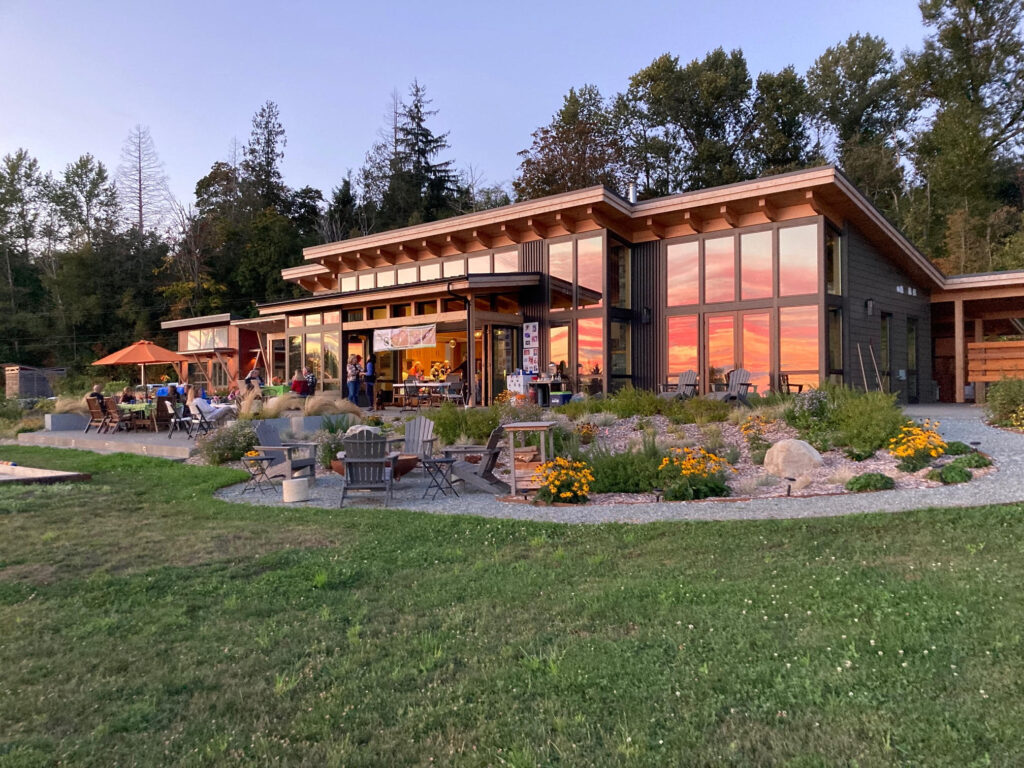
Nestled in the woods on the edge of the bluff above Quartermaster Harbor, the Butterfly House on Vashon Island has been a long time in the making. Although the clients have owned this 9 acre undeveloped lot for a few years, they were having difficulty finding an affordable house design they loved. They learned about FabCab through friends, and they decided to have FabCab design a custom home for them.

The Butterfly House combines FabCab’s timberframe and SIPs structural system with a floor plan unique to the client’s needs, with a separate bedroom wing, flexible space to accommodate guests, and open living spaces that blur the line between indoors and out. A large screened porch assures maximum enjoyment outside, even when bug season is at its peak!

The Butterfly House is about to be submitted for a construction permit, with construction slated to begin this coming spring.

“The aesthetics of FabCab with its really modern look and exposed timberframe construction really resonated with us. My husband and I both loved it immediately. We were suddenly very excited about the possibility of having found an affordable and beautiful home for our property. Evermore thanks to Emory and Chelsea and all the others who are literally making this long standing dream of ours come to fruition.” – Sara and Jed

FacebookTwitterDeliciousDiggStumbleUponGoogle ReaderShare

Rainscreens: Walls with Integrity

The Challenge
Light wood framing is a great building system; it’s fast and efficient to construct, and adaptable when needs change. But it’s not impermeable. At some point in a building’s life, moisture is bound to get behind siding and into the walls; it may be from an extraordinary weather event or the deterioration of a caulk joint. As originally developed, light wood framing could handle this too; each component was designed to shed water to the exterior. And when weather or age did allow water in, there was enough air infiltration within the walls that moisture was able to evaporate without causing damage. This is similar to the way masonry walls handle moisture: when it rains, water gets absorbed in the masonry; when the sun comes out, the water evaporates.

That equation changed starting in the 1970s when energy efficiency became an important factor and new building materials and methods came on the market. A “tighter” insulated assembly is a great boon to the comfort and utility costs of homeowners; new materials reduced construction costs.

An unintended consequence was that using materials of varying degrees of water absorption in a tight assembly could trap moisture inside walls, leading to rot and mold in the wood components. This was a problem especially with new materials such as “synthetic stucco,” which relied on an impermeable coating on the outside face for waterproofing. When that coating failed at any point, water could get in but not back out. That coating failed reliably, as it was also exposed to the elements. An epidemic of building envelope failures followed, giving rise to a whole industry dedicated to repairs of the damage.

The Response
The building industry has reaffirmed the wisdom of providing what the building code calls a “weather-resistive barrier” behind the finish siding. It’s a second line of defense, protected by finish siding from the solar exposure that would cause it to deteriorate, against water from the exterior. Whether the weather-resistive barrier is building paper or Tyvek, it is integrated with flashing at openings in the wall and installed to shed water back to the exterior.

As in a masonry wall, water also dissipates through evaporation as well as runoff. To ensure that both processes can proceed, architects and builders have begun to adopt a siding assembly called a rainscreen. In a rainscreen assembly, the siding is held off the weather-resistive barrier with vertical spacers, providing drainage/ventilation passages with screened openings at top and bottom. The passages allow water to drain and encourage it to evaporate.

Flashing is an integral part of the system, accommodating interruptions of the weather-resistive barrier at window and door openings as well as transitions in siding materials. Every joint and transition in materials needs to lap in the right direction, to shed water back to the exterior.

The finish siding then functions to protect the weather-resistive barrier, or drainage plane, against the wind and sun. Water intrusion behind the finish siding are anticipated and handled. Some designers even leave space between siding components to promote water evaporation.

Our Practice
At FabCab, our exterior walls incorporate rainscreens. We go further, using structural insulated panels (“SIPs”) instead of stud walls to eliminate the wall cavities where moisture can be trapped. SIPs walls and rainscreens are just two methods we employ to ensure that your FabCab will successfully resist the elements over the long term.

FacebookTwitterDeliciousDiggStumbleUponGoogle ReaderShare

FabCab Winter Incentives


We’re excited to announce winter incentives. Our timberframe and structural panel suppliers are offering winter discounts and FabCab is passing along the savings to you! In addition, we are offering a free iPad2 to clients. To qualify, FabCab Home Package orders must be placed by February 1, 2012. Please contact us for additional details.

FacebookTwitterDeliciousDiggStumbleUponGoogle ReaderShare